Sweet Dance
- 3.8
- Rating
- 1.00M
- Installs
- Free
- Price

 Analysis by App-foxy
I approached Sweet Dance as a decision rather than a quick download: is this the right kind of music game for the way you actually like to play? After spending time with it, my answer is yes for players who want a social, style-focused rhythm experience they can revisit in short sessions. It is less convincing for anyone looking for a strict music-training tool, a minimalist timing challenge, or a completely friction-free game with no paid extras.
Developed by AU Dance Studio, this free mobile game combines dancing, rhythm play, and character presentation. It has been available since December 8, 2019, and its audience has grown to over a million installs. The current version is 23.3, and it runs on Android 7.0 or later. Those details matter because this is not a tiny experimental rhythm title; it is an established game with enough activity to make the social side part of its appeal.
What to decide before you download
The first question is whether you want to play music or perform a whole identity. In many rhythm games, the song chart is the center of everything. Here, the dance theme is only one part of the attraction. I found myself paying attention to the presentation of my character, the feeling of taking part in a shared dance scene, and the way the game turns a short play session into something more expressive than simply tapping notes.
You May Also Like

 Blood Strike: 2.5 Anniversary
Blood Strike’s Loadouts Turn Every Drop Into a Tactical Gamble
A close look at Blood Strike’s custom loadouts: how fast access to signature weapons reshapes its battle royale rhythm, rewards preparation, and narrows the gap between fights.

 Pandora - Music & Podcasts
Pandora’s Music Is Easy to Start, but Harder to Recover
Pandora’s strength is its low-effort path from a seed to a station. Its weak spot is how much confidence it asks you to place in connection, setup, and quiet recovery.

 8 Ball Pool
 Is Built on Rivalries, Rematches, and Routine
A close look at the rivalries, rematches, shared routines, and unanswered safety questions that turn a quick pool match into a persistent mobile community.

 Samsung Music
’s Quiet Strength Is Playing What You Already Own
Its reach comes less from spectacle than from dependable access to a personal library. That simplicity is both the app’s strongest retention engine and its ceiling.

 AccuWeather: Weather Radar
AccuWeather Review: A Quick, Clear Forecast for Everyday Decisions
For everyday plans, the best forecast is the one you can understand quickly. AccuWeather makes rain timing, radar, and local conditions easy to act on, with a few trade-offs.

 Hill Climb Racing
Why Hill Climb Racing Still Turns Crashes Into One More Run
A tiny car, a bumpy hill and one more upgrade: Hill Climb Racing keeps resurfacing because its simple chaos makes every near-miss feel personal.
More From Our News Desk



That makes the game approachable for people who enjoy fashion, avatars, and light social interaction as much as they enjoy rhythm. You do not need to be an experienced dancer to understand what to do. The basic appeal is immediate: follow the beat, respond to prompts, and enjoy the performance. The learning curve is friendlier than that of a demanding arcade rhythm game, although players who want to master timing will still have room to improve.
I would also consider your tolerance for free-to-play design before installing it. The game itself is free, but optional purchases range from $0.99 to $99.99 per item. I did not treat that as an automatic deal-breaker, because a free entry point is useful for testing the style of play. Still, the presence of a broad purchase range means that players who dislike cosmetic spending or pressure around customization should approach carefully.
The age label is Mature 17+, so I would not choose it casually for a young child. That rating should be part of the decision before installation, especially if the device is shared with family members. For an adult or older teen who likes music-centered social games, the rating is a practical consideration rather than a reason to dismiss the entire experience.
The public response is fairly mixed but substantial, with a 3.8 average from around 14 thousand ratings and roughly 4.5 thousand written reviews. I read that as a useful warning against expecting universal polish. There is clearly enough here to attract and retain a sizable audience, but the experience will not suit every rhythm player equally well.
How the rhythm play feels in everyday use
My favorite way to use it is in short bursts. If I have a few minutes while waiting for an appointment or winding down after work, the dance format gives me a clear activity without demanding a long uninterrupted session. I can focus on the beat, enjoy the visual performance, and stop before the game starts to feel repetitive. That flexibility is one of its strongest practical qualities.
The important distinction is that this is not simply an audio player with interactive buttons. The music provides the structure, but the surrounding dance presentation gives each session more personality. I found that useful when I wanted something playful rather than mentally intense. A conventional rhythm game may be better when I want to chase perfect timing; this one is better when I want timing, spectacle, and a sense of participation together.
Beginners should give themselves time to adjust to the visual rhythm of the game. At first, it is easy to watch the character or the effects instead of concentrating on the input cues. My practical tip is to treat the first sessions as familiarization rather than performance tests. Once the visual language becomes easier to read, the game feels less busy and the music becomes a more reliable guide.
Another useful habit is to play with headphones when possible. I found that clearer separation between the beat and the surrounding effects made it easier to react naturally. This is not a claim about a special audio mode; it is simply a sensible way to reduce distractions in a game where timing matters. In a noisy room, the visual presentation can become more important, but that also makes mistakes feel less predictable.
Why the social and fashion angle changes the choice
The dance theme works because it gives the player more to care about than a score. I enjoy games more when progress has a visible personal flavor, and this title is clearly aimed at that feeling. The character and style elements can make a routine session feel like an occasion, particularly for players who enjoy showing taste through appearance rather than only competing for a higher result.
That also creates a trade-off. If you are indifferent to avatars, outfits, or the idea of presenting yourself inside a game world, part of the product's appeal will pass you by. You may still enjoy the rhythm activity, but you will be judging the game through a narrower lens than its intended audience. In that situation, a focused music game with fewer decorative layers may give you more value.
I would recommend deciding in advance what you want from customization. If it is a creative bonus, enjoy it as a side activity and avoid treating every desirable item as necessary. If customization is the main reason you play, set a spending limit before you begin. That simple boundary helps keep the free download from turning into an unplanned shopping habit, particularly when individual purchases can reach $99.99.
For friends, couples, or online communities, the dance framing is a natural conversation starter. It gives people something visual to compare and discuss, not just an abstract score. On the other hand, players who prefer private, self-contained sessions may find the social atmosphere less important than the core timing. I would not install it solely because it is popular with others; I would install it if the combination of music and presentation sounds enjoyable even when nobody else is watching.
Where it beats the usual alternatives
Compared with a traditional rhythm game built around dense note patterns, this is the better choice when you want a softer entry point and a stronger sense of character. The dance focus makes the game feel less like a technical exam. I can recommend it to someone who likes music but becomes discouraged by games that punish every small timing error or bury the performance under complicated controls.
Compared with a pure avatar or fashion app, it offers a more active reason to return. You are not only arranging a look; you are using that identity inside a music-based activity. That combination gives the game more movement and structure than a passive customization experience. The compromise is that players seeking deep fashion tools may find the rhythm component unavoidable, while dedicated rhythm fans may want more intensity than the social presentation provides.
It also occupies a different space from a music-learning app. I would not use it as a substitute for lessons, practice with an instrument, or a disciplined timing course. Its purpose is entertainment and performance, not formal instruction. That distinction is important for parents and adult learners who might otherwise assume that any music category game supports measurable musical development.
The strongest comparison is therefore not “which game has the best songs?” but “which kind of session do I want?” Choose this one for a colorful dance-centered break, a character-driven experience, and casual rhythm play. Choose a more specialized alternative when your priority is precision, serious progression, music education, or a completely offline-feeling solo routine.
Small frictions that affect long-term enjoyment
The free-to-play structure is the clearest source of friction. Even if I begin without spending, the existence of optional items priced from $0.99 upward can change how I evaluate rewards and customization. Players with strong self-control can simply ignore purchases, but people who enjoy collecting or personalizing everything may feel that the free version is only the starting point.
The Mature 17+ classification is another practical limitation. I would not hand the game to a younger player without checking the content and account settings personally. The label does not tell me how every moment will feel in context, so families should make their own judgment instead of assuming that a music game is automatically suitable for children.
There is also a possible attention problem. The combination of rhythm, dance presentation, and character-focused elements can be engaging, but it may feel busy if you prefer clean interfaces and a single objective. When I want a calm, highly focused challenge, I would rather use a simpler rhythm title. Sweet Dance is more enjoyable when I accept its layered presentation instead of trying to strip it down to a score attack.
Finally, the average rating of 3.8 suggests that expectations should remain balanced. I see that as a reason to try it with an open mind, not as a condemnation. The game has enough reach to prove that its formula works for many people, yet the score also supports my impression that personal taste matters greatly here. The same social and visual elements that attract one player may distract another.
The real cost of changing from another rhythm game
If you already play a traditional rhythm title, switching is easy at the technical level but not necessarily at the motivational level. You may understand the timing quickly, but you will need to decide whether you enjoy the broader dance identity enough to make the change worthwhile. The adjustment is less about learning a new genre and more about accepting a different definition of progress.
Players moving from a fashion-focused game face the opposite transition. You may appreciate the chance to make your character part of an active performance, but you will have to engage with rhythm mechanics rather than only visual choices. I suggest starting with short sessions and treating the first few dances as a test of the music loop. If the actual play does not hold your attention, attractive presentation alone will not make the game a good long-term fit.
The download is free, so the financial cost of trying it is lower than buying a premium game. The more important cost is time and attention: learning the interface, deciding which parts matter to you, and resisting purchases that do not improve your enjoyment. I would especially avoid spending early. Play long enough to learn whether you enjoy the dance sessions themselves before paying for additional personalization.
Device compatibility is reasonably broad because the game supports Android 7.0 and later, but compatibility on paper is not the same as comfort in practice. On an older phone, I would pay attention to responsiveness and whether the visual activity makes timing harder. If inputs feel delayed or the screen becomes distracting, that is a strong sign to use a different rhythm game rather than blaming your ability.
Who should choose it, and who should skip it
I think it is a good match for adults and older teens who want a free music game with a dance identity, enjoy expressive characters, and prefer casual sessions over relentless difficulty. It is especially appealing if you like the idea of combining rhythm play with a personal visual style. The million-plus install milestone also means you are joining a game with an established audience rather than an obscure experiment.
I would steer competitive rhythm specialists toward a more focused alternative if their main goal is technical mastery. I would also steer young children and families toward something with an age classification that fits their household more comfortably. Players who dislike in-app purchases should try it only if they are comfortable ignoring optional content and setting firm spending limits.
People with limited storage, older hardware, or a strong preference for quiet solo games should make a more cautious choice. The game is at its best when its dance presentation feels like a benefit. If that presentation sounds like visual clutter to you, the central rhythm activity may not be enough to compensate.
One overlooked use case is social downtime. I can imagine opening it after meeting friends, using a few dances as a light shared topic, and then moving on without committing to a long campaign. Another is mood-based play: when I want something more animated than a puzzle but less demanding than a competitive action game, the dance format fills that middle ground effectively.
My recommendation after weighing the trade-offs
I recommend giving Sweet Dance a trial if you want a dance-centered rhythm game with personality rather than a bare score-chasing loop. Start free, use headphones, learn the visual timing at your own pace, and decide whether the actual dances remain fun before thinking about purchases. That approach lets the game prove its value through play instead of through its presentation.
My recommendation becomes a no when your priorities are formal music practice, serious competitive precision, child-friendly content, or a completely purchase-free experience. In those cases, a specialized alternative will probably serve you better. This game is not trying to be every kind of music app, and judging it by those standards would miss its real strengths.
For the right player, the appeal is quite specific: a free mobile game from AU Dance Studio that turns rhythm into a social, visual dance experience and remains easy to sample. Its 3.8 average shows that it is not universally loved, but its broad install base shows that the formula has found an audience. I would recommend it to a friend who wants stylish, casual music play and understands the limits of optional spending. I would not recommend it blindly; I would recommend it with those conditions clearly in mind.
FAQs for Sweet Dance
01What is Sweet Dance, and what can I do in the game?
Sweet Dance is a colorful mobile rhythm and social game where you follow music tracks, tap or swipe in time with the beat, and compete for higher scores. Beyond dancing, you can customize your character, collect fashionable outfits, interact with other players, join social activities, and explore different game modes. It is designed for players who enjoy music, fashion, customization, and online community features.
02Is Sweet Dance free to download and play?
Sweet Dance is generally free to download, allowing you to access the basic gameplay without purchasing the app. However, it may include optional in-app purchases for virtual currency, costumes, accessories, special items, or other enhancements. Progress can usually be made without spending money, although some premium content may require patience or payment. Check your device’s store listing for current pricing and purchase details.
03Does Sweet Dance require an internet connection?
Sweet Dance is primarily an online game, so an internet connection is normally required for features such as account access, multiplayer dancing, events, rankings, messaging, and downloading new content. A stable Wi-Fi or mobile data connection helps prevent interruptions during rhythm sessions. Because the game includes social and server-based systems, offline play may be limited or unavailable, depending on the version installed.
04Is Sweet Dance suitable for children and younger players?
Sweet Dance may appeal to younger audiences because of its bright visuals, music, costumes, and simple rhythm controls. Nevertheless, parents should review the age rating and privacy information before allowing children to play. Online chat, social interaction, advertisements, and optional purchases can require supervision. It is also advisable to enable device-level purchase restrictions and discuss safe behavior when communicating with other players.
05Can I customize my character and interact with other players in Sweet Dance?
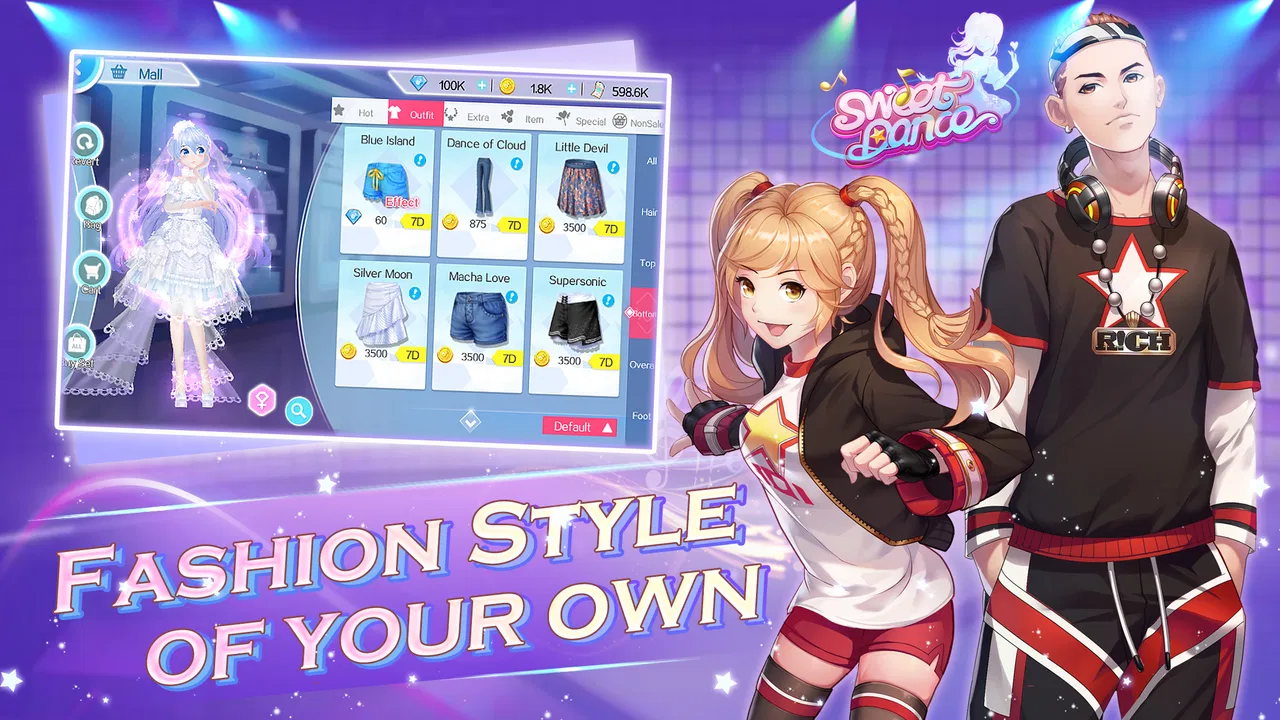
Yes, character customization and social interaction are important parts of Sweet Dance. Players can typically change hairstyles, clothing, accessories, and other appearance details while collecting or unlocking new items. Depending on the available features and server version, you may be able to dance with friends, join groups, participate in events, send messages, and compete on leaderboards. Some customization and social features may be linked to progression or paid items.
Pros
- Large library of licensed songs and regularly updated music content.
- Multiple dance modes make the game enjoyable for casual and competitive players.
- Avatar customization includes outfits
- hairstyles
- accessories
- and visual effects.
- Social features let players chat
- form relationships
- and join community activities.
- Colorful 3D visuals and choreography create an engaging rhythm-game experience.
Cons
- Requires a stable internet connection for most features and gameplay.
- Progress can feel slow without spending currency on upgrades or cosmetics.
- Frequent events and notifications may feel overwhelming to some players.
- The app can consume considerable storage space after downloading extra content.
- Chat and social interactions may require parental supervision for younger users.

Sweet Dance
Gallery